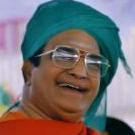
Deletedid1 Posted September 21, 2010 Report Posted September 21, 2010 [b]Excerpts from a 2008 interview with Homi Nusserwanji Sethna.[/b]SPEAKING to Frontline at his Mumbai home on September 18, 2008, Homi Nusserwanji Sethna, former Chairman of the Atomic Energy Commission, gave fascinating insights into India's nuclear energy programme, recalled Chinese Prime Minister Zhou Enlai's visit to the Uranium Metal Plant in Trombay, and narrated how Prime Minister Indira Gandhi “orally” asked the Department of Atomic Energy to conduct the nuclear test at Pokhran in May 1974 and how “no written orders” ever came from her. When Sethna phoned Indira Gandhi to ask for written orders soon after the nuclear device was buried in the shaft at Pokhran, she said: “Have you become chicken-hearted?” Excerpts:[b]How was the Atomic Energy Establishment Trombay [AEET] formed?[/b]Bhabha said, “Look Homi, we have to form the DAE now.” I said, “How the hell do I do it? It is not my job. You are an expert. You get your clearances and I will do the needful.” So he got them and he made it independent of Bhatnagar [S.S. Bhatnagar, Director, Council of Scientific and Industrial Research], which was what he wanted, and we continued with our work.By then, I knew how to do the separation [of plutonium]. Then Bhabha said, “Homi, put up a uranium metal plant.” There were two choices. One was to go to Britain. Britain was willing to give it to us for something like one million pound sterling. This was too much. I said, “No way.” So I took the plunge and said I would do it. I made a plant to make uranium metal. Even now, the plant is working. It supplies all the uranium needed for the reactors, that is, CIRUS and Dhruva, which is a 100 MWt reactor, which is damned good.... I remember Bhabha getting Zhou Enlai to Trombay and showing him the uranium isotopes done at the plant. Do you know what Zhou Enlai said? “It will take 10 years for us to catch up with you.” Within two years, they [the Chinese] had the bomb.[center][img]http://www.frontlineonnet.com/images/20101008272010001.jpg[/img][/center] [center][b]HOMI SETHNA AT a panel discussion on "Indo-U.S. Nuclear Deal: Advantage India", organised by the Indian Merchants Chamber in Mumbai on July 9, 2008.[/b][/center][b]Within two years?[/b]Because they got it from the Russians. The Chinese plant was done out of range of the U.S. bombers. It was done at a point where the U.S. bombers could not bomb it and return. They could not bomb it and get out.[b]What was Bhabha's reaction when China exploded a nuclear device in 1962?[/b]They had beaten us, but they had got the knowhow from the Russians. At that time, Russia and China were one [friends]. Anyway, because of the range… I told you… That was that…We were told to do the experiment, orally. Orally. But no written orders from Mrs. Gandhi.[b]The PNE?[/b]PNE is peaceful nuclear experiment. We had to select a spot. Wherever we went, we had trouble because there were (a) rail and road bridges, (b) population, in case of wind, in case it [the nuclear device] came up, and (c) essentially, we went down to a state of affairs where we had to make special explosives, etc., etc., and the headman of scientific research in the armed forces was a person who did not believe in…[b]He did not believe in nuclear weapons?[/b]He said he did not believe in atomic, biological and chemical weapons. That was his principle. His daughter suffered from palsy…. So he was a very religious person. He believed in Sai Baba and all that…. I went to Mrs. Gandhi and said, “Look, without the help of the Army I cannot do it.” She said, “O.K., you wait.” She sent this fellow. What is his name? She got a person called… from somewhere near Bangalore…My dear fellow…You are taxing my memory!.. It was B.G. Nag Choudhury.[b]He was DRDO Director-General[/b].He and I worked very well. We understood what I had to do and what he had to do. We decided on Pokhran. This is where the Army tested out its field artillery. We moved everything at night – the whole assembly to Pokhran at night because nobody would bother us then. We had police protection right through. Both the police and the Army guarded our convoy. We reached. We assembled the device. We did it in a way that people did not understand. It was L-shaped.It was an L-shaped shaft?Yes. We went down to 600 feet. That is all. Bad. We should have gone down to at least 10,000 feet. The trouble was we struck water. So we had to stop. How did we recognise this spot? There was an old man who used to herd the goats in the region. He was a Muslim who worshipped the deer. He said you should protect the deer. We agreed on that. You need not worry. Then he said you go to this place and you will find complete lack of water. We did, and at 600 feet, ‘ogaya'.You know Mrs. Gandhi never wrote a piece of paper in which she agreed that I shall do it.[b]She did it so beautifully [secretively].[/b][b]What do we do now? I said, “Let us lower it [the nuclear device] into the tunnel and finish up with the bloody thing. After that, we will hang up and we will go back to our work at Trombay. At the end, we did it. Before I fired the thing in, I rang her [Mrs. Gandhi] and said, “Look, I have buried the bloody thing. There was no ‘bloody.' I have buried the thing. Now, there is no way of getting it back. I am going to try it out tomorrow. We will fill up the hole and we will do it tomorrow.”[/b]We worked the whole night and finished up everything… We had a green laser at the top. We supplied power to it. It was flashing away. We finished the thing. We buried it with the help of the Army. The Army man was a good explosives man. We designed everything. Then I rang up Mrs. Gandhi and said, “We have buried it. You have not given us permission [to detonate it]. But I intend to go ahead.” What do you think was her reaction? “I noticed that you have become chicken-hearted.”[b]You told her that?[/b]No. She told me, “You have become chicken-hearted.”[b]You needed permission from her in writing.[/b]Yes. She said, “If it is successful, I will give it to you.” We did it. When it happened, I told her it has happened now. I said I am going back to Bombay. But we are finding it difficult to get the transport because of the trains. There was a train station near Pokhran. I will go home to Bombay.She said “Don't worry” and made a deal. She sent us a plane! An IAF plane for my own flight! We were given full treatment. Excellent food. We started at Jaipur. There was an Army base at Jaipur, outside the town. We had beer, etc. We were ready. And the plane took us to Delhi. In Delhi, we landed at the technical area, that is the Air Force area.We were to go immediately. I said [to her], “I am going to the hotel for a wash.” “No, no, come this way only” – that was her argument. I said, “All right.” I went there. “First come to my office.” So we went to her office. She was busy with her sister-in-law [ sic] in the South Block… Krishna Huthee Singh. Not Huthee Singh. The other one…[b]Vijayalakshmi Pandit.[/b]Vijayalakshmi Pandit. She hurried her up. She herself came outside, took me by the hand and congratulated me. She shook hands with me. I said, “Now may I go?” She said, “Nothing of the kind. There is a press conference next door.” So I went to the… Then I went to the hotel, had a bath, a good meal and went to sleep. Next morning, I took the first plane. I took the Air India plane which was doing Bombay-London. So that was that.[b]Can you say something about Bhabha? How did he form the AEET, which was renamed Bhabha Atomic Research Centre after his death?[/b]He had absolute powers to rule anybody…. He was a brilliant administrator.[b]He recruited the best talent. How did he do that?[/b]I don't know how he did that. He was more and more interested in creating an organisation that would be a success even when he was not there. He was supposed to go to a meeting of the International Atomic Energy Agency [IAEA] in Vienna. He said, “So and so in BARC had committed suicide. He was in the biology department. He has taken poison because he was disappointed in love or something.” So Bhabha said to me, “You go.” I said, “All right.” But tomorrow is Amavasya [new moon day], his mother was saying. I gathered together all my bags. He again changed his mind, “Hey, Homi, I am going. You need not bother.” That day was Amavasya. He died. I would have been on Mont Blanc.Dr Bhabha's mother said he must not go on Amavasya day. Dr Bhabha's mother, who was alive at that time, believed in all that. She belonged to an aristocratic Parsi family. Petit. She said, “Go tomorrow.”[b]But he went on Amavasya day[/b].Yes, on Amavasya… It was sheer misjudgment on the pilot's part. He mistook a peak for a cloud. He ran straight into it. Bhabha's body has not yet been found. But the person sitting next to him, who was Thelly Tata's…[Mrs. Sethna chipping in: That was J.R.D. Tata's brother-in-law…He was Bartolli. His suitcase was found. But Bhabha's never was.]
Sanjay Sahu Posted September 21, 2010 Report Posted September 21, 2010 %<>( you rock %<>( you rock %<>( you rock %<>(
Deletedid1 Posted September 21, 2010 Author Report Posted September 21, 2010 [b]The nuclear man Homi Nusserwanji Sethna (1923-2010) boldly steered the Department of Atomic Energy through turbulent times.[/b][center][img]http://www.frontlineonnet.com/images/20101008272009801.jpg[/img][/center][center][b]Prime Minister Indira Gandhi at the site of the first nuclear test at Pokhran, in December 1974. She is flanked by Homi Sethna (right), then Chairman of the AEC, and K.C. Pant, Minister for Energy.[/b][/center]“MY dear fellow, you are taxing my memory!” remonstrated Homi Nusserwanji Sethna jocularly on the evening of September 18, 2008. But his memory was razor-sharp and he recalled important events in the history of India's atomic energy programme with clarity, even people's names with their initials. This reporter had gone to meet him in his spacious flat in Mumbai, to get his reminiscences of Homi Bhabha, whose birth centenary was to be celebrated the following year.It soon became clear that Sethna loved telling stories, especially about what transpired between him, when he was Chairman of the Atomic Energy Commission (AEC), and Prime Minister Indira Gandhi in the hours immediately before and after India exploded its first nuclear device at Pokhran on May 18, 1974; about how Bhabha offered Sethna, on the edge of Willington Club's swimming pool in Bombay (Mumbai), a job in the Department of Atomic Energy (DAE); and about how Bhabha first wanted Sethna to attend the International Atomic Energy Conference in Vienna in January 1966 but eventually went himself, brushing aside his mother's premonition, only to die when his plane crashed on Mont Blanc.After Bhabha, Sethna, who died on September 5 at the age of 87, was the longest serving AEC Chairman; he held the post for 11 years from 1972 to 1983. Sethna was earlier Director of the Bhabha Atomic Research Centre (BARC), Trombay, from 1966 to 1972, when the plan for building India's largest and the most sophisticated research reactor, Dhruva, was conceived. He boldly steered the DAE during some of its most turbulent phases in the wake of India's peaceful nuclear experiment (PNE) of 1974. (There followed embargoes that the DAE had to face. The United States reneged on its agreement with India to supply enriched uranium as fuel for 30 years for the U.S.-built reactors at Tarapur in Maharashtra. The Canadians abandoned the construction of the second Pressurised Heavy Water Reactor (PHWR) at Rawatbhatta in Rajasthan. The French walked out on the construction of the Fast Breeder Test Reactor (FBTR) at Kalpakkam in Tamil Nadu.)Sethna pioneered the reprocessing technology in India and built the first plant at Trombay to reprocess plutonium. It was this plutonium that went into the making of the nuclear device that was tested in 1974.The book entitled Atomic Energy in India, 50 years, authored by C.V. Sundaram, L.V. Krishnan and T.S. Iyengar and published by the DAE in August 1998, places the importance of this plutonium-reprocessing plant in the proper perspective. It says: “Known as Project Phoenix …it became one of the most important landmarks in the Indian programme, that this plant entirely designed and built by Indian engineers, under the leadership of H.N. Sethna and N. Srinivasan, could be completed and commissioned by mid-1964. With this, India became one among the five countries in the world (the others being the U.S., the U.K., France and the former Soviet Union) with demonstrated capabilities in the advanced technology of nuclear fuel reprocessing and the recovery of plutonium.”Anil Kakodkar, former AEC Chairman, described Sethna as “a no-nonsense person” who gave “bold and courageous leadership to the DAE during several times of crisis”. When the U.S. stopped supplying enriched uranium fuel to the two reactors at Tarapur in 1974, Sethna, Kakodkar said, “showed tremendous courage…, preparing the country for an alternative fuel supply. The French stepped in and gave us the enriched uranium. If that had not happened, Sethna was getting ready with his MOX [mixed oxide] programme to run the Tarapur reactors on MOX fuel. We got the supply from France and we also developed the MOX fuel.”Srikumar Banerjee, AEC Chairman, praised the leadership qualities that Sethna demonstrated when the Canadians stopped building the second reactor at Rajasthan. “When the Canadians went away in 1974, we had to take up the development of the PHWR on our own. Under his leadership, a standardised model of the PHWR was evolved,” Banerjee said.Sethna, who was born on August 24, 1923, took the B.Sc. (Tech) degree in chemical engineering from the Department of Chemical Technology, University of Bombay, in 1944. He acquired an M.S. in chemical engineering from the University of Michigan, Ann Arbour, U.S., in 1946. He first joined Imperial Chemical Industries, and then the DAE in 1949.During the interview, Sethna himself popped the question: “I was recruited, do you know where?” and answered it thus, “Willington Club swimming pool! [Laughs.] Do you know how it happened? The argument was on how to make alcohol, absolute alcohol, on a big scale. You have alcohol and when you distil it, you go up to 90 per cent, to 96 per cent [purity]. How to cross over from 96 to 100 per cent? For that, when you add benzene or any petroleum product, you get a low-boiling mixture of three things – alcohol, water and benzene. Bhabha said there was no such thing.“I said, ‘Look, this is a book. And I gave him my book.' He said, ‘Shall I keep it?' I said, ‘It is a bloody valuable book. It is not available. It cost me $8 and that is a lot of money.' That was the beginning of the relationship between Bhabha and me....”But how was Sethna recruited to the DAE? This was his reply: “Wait a minute. Then came the question…. Where to give this fellow a start if he were to be brought in? Bhabha was no fool. He caught hold of a lawyer, J.D. Choksi, who was a director of Tata Sons. So they formed a company called, the Indian Rare Earths. I was one of the first recruits. The other recruit was suggested by K.S. Krishnan. He too had a foreign degree. I was a graduate of Michigan University…”Sethna and his wife, then newly married, stayed in Kochi at a hotel owned by Spencer's. From Kochi, he would go to Alwaye (Aluva) where the IRE plant was to come up. The design of the IRE plant was provided by a French company called Societie de Terre.“But once the plant started production, came the trouble,” said Sethna. “First, nobody would buy the rare earths.” This was because the Second World War was over. It looked as if the extracted rare earths would have to be dumped in the sea. But on his insistence, the thorium that was extracted was dried, packed in steel containers and stored in godowns.“Then, all of a sudden, rare earths boomed,” Sethna said. “Optical glass etc…. We spent Rs.1 crore on that plant. Within six to eight months, we made a profit of a crore of rupees… Then the U.S. came in and said they would like to buy thorium as thorium nitrate. We put up a thorium plant in Bombay and made thorium nitrate, where the Yanks would come, do the analysis, etc… It took a year and a half to fulfil their orders. By that time, everything was up in Alwaye and we were happy.”As a logical consequence of the IRE plant and the thorium plant , Sethna went on to build the Uranium Metal Plant at Trombay (1959). His next challenging assignment was to build the Plutonium Plant, again at Trombay, which his peers considered to be an outstanding achievement. A DAE note says, “This remotely operated, highly instrumented plant was designed and constructed entirely by Indian scientists and engineers under Sethna as the project engineer. Besides, it was completed on August 1, 1964, within the original estimated cost and scheduled time.”He then went on to build the Jaduguda Uranium Mill, now in Jharkhand, to produce yellow cake from natural uranium.
Deletedid1 Posted September 21, 2010 Author Report Posted September 21, 2010 [b]All his life he worked in and for India. Homi Sethna sought no fame and did not court politicians.[/b]IN the death of Homi Nusserwanji Sethna on September 5, 2010, India has lost its staunchest and most consistent champion of its nuclear sovereignty. His achievements as an institution builder have been mentioned in the many and richly deserved tributes that were paid on his demise – the setting up of the Indian Rare Earths plant in Alwaye (Aluva), Kerala; the construction of the thorium plant; the designing and building of the first plutonium separation plant at the Bhabha Atomic Research Centre (BARC), Trombay, completed in 1964; and the uranium mill in Jaduguda (Jharkhand), completed in 1967. Earlier, in 1956-58, he was Project Manager of the research reactor, CIRUS (Canada-India Research-US).Two tributes stand out. Ronen Sen, who as Deputy Secretary in the Ministry of External Affairs was seconded to the Atomic Energy Commission, presided over by Homi, said: “It was Homi Sethna's leadership which inspired our nuclear scientists and engineers to rise to the formidable challenges … and emerge as one of the very few countries in the world, and Asia's first country, with full nuclear fuel cycle facilities.”Ronen Sen, who retired after a distinguished career as India's Ambassador to the United States, loyally kept in touch with his mentor until the very last. Another tribute that bears mention is by one of Homi Sethna's successors, Anil Kakodkar. “He was a rare leader, one who thought far ahead. Name any important thing in Indian nuclear science and he has had a role to play. You need plutonium for fast reactors and for the strategic programme – and it was Mr. Sethna who built India's first plutonium plant in Trombay. Challenges that arose during the construction of reactor Dhruva and also during the construction of the Madras Atomic Power Station, which houses India's first truly indigenous heavy water reactors, were also overcome by his resolute will.” His leadership during the construction of the Tarapur Atomic Power Station was “absolutely courageous”. Plans for the construction of Dhruva, India's largest research reactor, were conceived when he was Director of BARC (1966-72).All his life he worked in and for India. He sought no fame and did not court politicians. On the contrary, he had a problem concealing his contempt for them. Indira Gandhi he adored and, true to form, made no secret of it even when she was out of power and Morarji Desai was Prime Minister.This writer may be pardoned for once striking a personal note, in the two decades' association with Frontline. I have lost a dear friend, a man who had character, integrity of the highest kind, and who never compromised with his principles. We met first in 1978 and it was a rewarding experience. The little I know of nuclear diplomacy I owe it all to Homi. The first thing that struck me was his determination to build an independent nuclear cycle. Homi was not soft of speech but he had a soft and caring heart. He gave freely and extended and commanded loyalties even after his retirement from high public office.We have come a long way since Pokhran I in 1974, of which he was a prime architect. Today few care to recall the battles he fought when the U.S. reneged on its agreement of 1963 and its solemn commitment for continued supply of low enriched uranium fuel to the Tarapur Atomic Power Station. The Canadians walked away from the Rajasthan Atomic Power Station (RAPS). The Russians extracted a big price for the supply of heavy water for RAPS.Morarji Desai and the men around him did little to support him. The U.S. Ambassador Robert Goheen strutted about freely, as most American Ambassadors tend to do. Even under Indira Gandhi there were those who were jealous of his prestige and influence. During all this he had one formidable supporter, M.A. Vellodi, Secretary in the Ministry of External Affairs, a master of detail who commanded respect in the councils of the United Nations. He shared Homi's vision.Indira Gandhi gave her green signal for the fabrication of a device for a PNE (peaceful nuclear experiment) on September 7, 1972, on the banks of the Powai Lake in Bombay. She was there for the 10th convocation of Indian Institute of Technology Bombay in Powai. After the explosion at Pokhran on May 18, 1974, all hell broke loose. An international sanctions regime was devised. The U.S. enacted the Nuclear Non-Proliferation Act, 1978.Homi had a realistic distrust of the Americans. “We were told [in 1966] to devalue the rupee, which we did. We were told that money would flow once we devalued, and it would be all milk and honey. But money did not flow in.”The U.S. insisted on an assurance that India would not stage any more PNEs. This was refused. All that Homi wrote in a letter to Dixie Lee Ray, Chairperson of the U.S. Atomic Energy Commission, was that the fuel would be “devoted exclusively to the needs of the station”.From July 1975, action on applications for fuel, filed by India's agent Edlew International Co., was deliberately stalled by the Nuclear Regulatory Commission as well as the U.S. government. Hearings were held by congressional committees. When the U.S. cited the Act as an excuse for backing out of its commitments, Homi tartly rejoined by citing Article 27 of the Vienna Convention on the Law of Treaties, which says: “A party may not invoke the provisions of its internal law as justifications for its failure to perform a treaty.” He also cited an authority on the law who said: “In some cases, legislation could of itself constitute a breach of treaty provisions.”Two episodes illustrate vividly the fronts more than one on which Homi had to fight. One was the hare-brained proposal in 1978 for a joint “Ad Hoc Scientific Advisory Committee on Safeguards Question”, headed by Sigvard Eklund, Director-General of the International Atomic Energy Agency (IAEA). Eklund sensibly refused. His successor, Hans Blix, approved U.S. arms for Pakistan in order to wean it away from a nuclear programme. He played, not surprisingly, a devious role on the Iraq inspections. The committee's provenance was highly dubious. It was a ruse to pave the way for application of full-scope safeguards that the Americans demanded, as K. Subrahmanyam has revealed in an article in The Indian Express on September 7:“I asked Sethna whether he was happy with the PM's [Prime Minister's] decision to discuss with the Americans their proposal on examining the feasibility of the full-scope safeguards to the Indian nuclear programme. Sethna said he was totally opposed to the idea and it was not an American proposal but one initiated by the PM's secretary, V. Shankar. I pointed out that the PM had told Parliament that it was an American proposal and there was no harm in India discussing it with the U.S. Sethna pulled out of his file the fax message from the Americans, which referred to the full-scope safeguards discussion as Shankar's proposal and proceeded to outline the U.S. point of view.” Shankar, I must add, was not the only one to play the Americans' game. A top Indian diplomat batted for them enthusiastically.A U.S. aide-memoire of November 13 pointedly said that the game was “at Indian initiative”. Joseph Nye led the U.S. team. At the meeting in New Delhi on November 10, to quote the minutes, “he referred to the discussions with the Principal Secretary [V. Shankar] in Washington when the U.S. side had agreed to the Indian proposal for a committee of scientists to examine the safeguards question. …” A Prime Minister who assigns or permits his Principal Secretary to perform such functions – bypassing the Chairman of the AEC – has only himself to blame for the mess. Morarji Desai changed his mind eventually.By the end of 1981 India was on the verge of terminating the 1963 accord with the U.S. for its persistent breaches. Three rounds of talks were held in April, July and November. On November 12, India formally, explicitly informed the U.S. that it intended to abrogate the agreement unless it received “guarantees” of supply of the fuel. On December 22, 1981, Indira Gandhi threw a bombshell that took Homi as well as Vellodi by surprise – a final decision “should ensure that the Tarapur Atomic Power Station continues to operate… Apart from that, we have to look at overall bilateral relations with the U.S.”She had decided to pay a visit to the U.S., which she did a few months later. U.S. Ambassador Henry Barnes' “Non-Papers” contained threats of sanctions. But not before Homi had been bypassed once again. He had led the delegation to the talks. Eric Gonsalves, Secretary in the Ministry of External Affairs, was an associate. “The U.S. side came up with the new twist on the eve of the third round. Malone played (outside the official talks, and ‘privately' to Gonsalves) upon the possibility that the United States might be able to get someone within the European suppliers' group to send fresh fuel for Tarapur within the control framework of the 1963 agreement. Although there were earlier recommendations from Malone that India should consider the Soviet Union as an alternative supplier the party really favoured by Washington seemed to be France.” (N. Ram, “India's Nuclear Policy”; IDSA Journal, April-June 1982, page 513). Gonsalves had “private” talks with James Malone, the U.S. negotiator, way back in April 1981. It was with Gonsalves that Malone struck the third-supplier deal.It is high time a documented official history of India's nuclear travails was brought out. I had promised Homi to write such a work. I did not.
Sanjay Sahu Posted September 21, 2010 Report Posted September 21, 2010 :surprised-038: :surprised-038:Endi malli intha chaata bharatam esnav?
Deletedid1 Posted September 21, 2010 Author Report Posted September 21, 2010 [quote author=nani gadu link=topic=101059.msg1074111#msg1074111 date=1285085525]naaku english raadhugaaaaaaa.................. F@!n[/quote]parledu..............nrechukoni saduvuko................hero gurinchi kottukovatam kante man India lo unna intellectuals gurinchi telusukovatam uttamam sHa_high5ing sHa_high5ing
pikki Posted September 21, 2010 Report Posted September 21, 2010 Thanks mama, one of the very very good post of what we have to know atleast once about our country's brilliant minds, this is one of my fav posts....Take, bless you,Bye
Deletedid1 Posted September 21, 2010 Author Report Posted September 21, 2010 [quote author=pikki link=topic=101059.msg1074202#msg1074202 date=1285087937]Thanks mama, one of the very very good post of what we have to know atleast once about our country's brilliant minds, this is one of my fav posts....Take, bless you,Bye[/quote] sHa_high5ing sHa_high5ing sHa_fr1ends
Nellore Pedda reddy Posted September 21, 2010 Report Posted September 21, 2010 *=: *=: *=: *=: you rock you rock






.thumb.jpg.ce42bb16ec102475a78c2087ce269c7d.jpg)

Recommended Posts